I have provided free PDFs for some of these readings in English and in Spanish when possible. Otherwise, click the title if you are interested in buying it. Don’t forget to check with your local libraries if they have these readings in their database!
by E. Bradford Burns and Julie A. Charlip (PDF in English) – This volume of Latin American history incorporates the history of Latin America and an interpretive history of Modern Latin America with a focus on the central dynamic of Latin American history.
Banana Wars: Power, Production, and History in the Americasby Steve Striffler and Mark Moberg (PDF in English) – A history of the Americas as told through the cultural, political, economic, and
agricultural processes that brought bananas from the forests of Latin America and the Caribbean to United States and Europe.
U.S. Policy in Latin America:
When States Kill: Latin America, the U.S., and Technologies of Terrorby Cecilia Menjívar and Néstor Rodriguez – Organized by region, the essays in this book address state-sponsored terrorism. Most take the perspective that state-directed political violence is a modern development of a regional political structure in of U.S. political interests, others acknowledge that Latin American states enthusiastically received U.S. support for their campaigns of terror. All the essays exemplify how technologies of terror have been transferred among various Latin American countries, with particular attention to the role that the United States has played in such transfers.
Dark Alliance: The CIA, the Contras and the Crack Cocaine Explosionby Gary Webb – A series of investigations concerning a drug case that uncovered the conspiracy involving the Nicaraguan Contra Rebels, crack cocaine dealers in the U.S., and the Central Intelligence Agency.
Latin American Current Affairs:
The School of the Americas: Military Training and Political Violence in the Americasby Lesley Gill – Founded in 1946, The School of the Americas (soa) is a U.S. Army center that has trained more than sixty thousand soldiers and police, mostly from Latin America, in counterinsurgency and The school is associated with the participation of the School’s graduates in torture, murder, and political repression throughout Latin America. Lesley Gill goes behind the façade and presents a comprehensive portrait of the School of the Americas.
Neither Enemies nor Friends – Latinos, Blacks, Afro-Latinosby Anani Dzidzienyo and Suzanne Oboler – Leading scholars focus on the contemporary meanings and diverse experiences of blackness in specific countries of the hemisphere. The anthology introduces new perspectives on comparative forms of racialization in the Americas and presents its implications both for Latin American societies, and for Latinos’ relations with African Americans in the U.S.
Latin American Popular Culture Since Independence: An Introductionby William Beezley and Linda Curcio-Nagy – A collection of essays that highlight the diversity of Latin America’s culture from independence to the present. Drawing on a rich array of case studies, this text introduces the complexity of motives behind and the diversity of expression of popular culture in Latin America.
This book tells the story of the unexpected impact of the Indian rights movement on world politics, from reforming the United Nations to evicting oil companies. Based on case studies from Ecuador, Mexico, Brazil, Nicaragua, and Bolivia, this book analyzes the implications of these human rights experiences for all of Latin America’s 40 million indigenous citizens, and the 300 million native people throughout the world.
Indigenous Movements and Their Critics: Pan-Maya Activism in Guatemala by Kay B. Warren – The book focuses on Guatemala’s peace processe (1987-1996) and highlights the role that Mayan intellectuals played in their democracy in Guatemala and in creating a new middle class.
Confronting Globalization: Economic Integration and Popular Resistance in Mexico by Timothy A. Wise – Written by a team of U.S. and Mexican collaborators, the book illustrates how Mexican communities cope with the impacts of the North American Free Trade Agreement by highlighting the importance of trade regulations on poor communities worldwide.
U.S.-Mexico Border:
The Line Becomes a River: Dispatches from the Borderby Francisco Cantú – The account of a former U.S. Border Patrol agent, his experiences with the dehumanization of migrants, and his struggles with types of violence on both sides of the border.
by Samuel Truett and Elliott Young (PDF in English) – Chronicles of the transnational processes that bound Mexico and the U.S. together through the formative history of the borderlands.
The Children of NAFTA: Labor Wars on the U.S./Mexico Borderby David Bacon – Firsthand accounts from Mexican workers and their labor struggles in fields and factories along the U.S-Mexico border since the signing of the North American Free Trade Agreement.
Latin American Literature:
One Hundred Years of Solitude by Gabriel García Márquez (PDF in English/PDF en español) – A novel that tells the story of the rise and fall, birth and death of the mythical town of Macondo through the history of the Buendia family.
The Book of Lamentationsby Rosario Castellanos – A novel of a Mayan uprising that takes places in Chiapas, Mexico, in 1712, 1868, and the 1930s, and combines historical events with modern times.
The Weight of All Thingsby Sandra Benitez – A novel that takes places in El Salvador during the civil war of the 1980s, it tells the story of a nine-year-old narrating the trauma of war.
A bilingual folktale reveals some wisdom of the indigenous peoples of Chiapas while also providing a perspective on the struggles of the people there as they fight to conserve their culture.
The Tree of Life: Stories of Civil Warby Mario Bencastro – A collection of short stories about the passion and politics of civil war in El Salvador from the perspectives of everyday people.
“Logging companies keen to exploit Brazil’s rainforest have been accused by human rights organisations of using gunmen to wipe out the Awá, a tribe of just 355.”
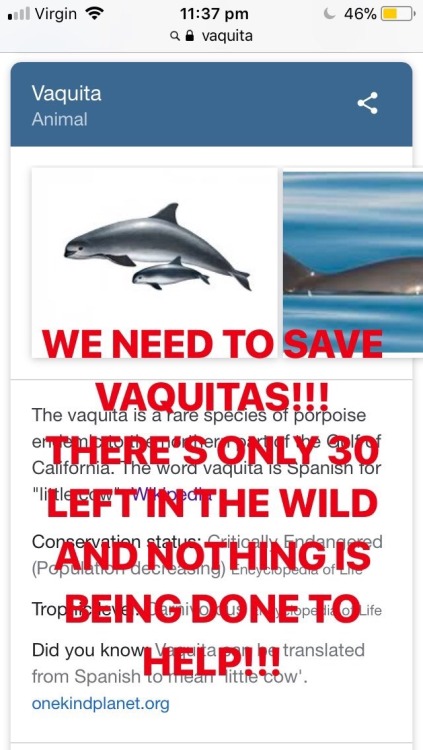
These beautiful animals are the vaquitas, the world’s smallest and most endangered porpoise. There are an estimated 12-30 remaining in the wild and their numbers have been rapidly declining due to being caught in illegal fishing nets.
APROXIMATELY 36 ARE KILLED EACH YEAR. THERE ARE ONLY 30 LEFT. THIS COULD BE THEIR LAST YEAR IF WE DON’T DO SOMETHING ABOUT IT!!!
Donate to conservation foundations like the WWF who work to protect vaquitas! We need to keep this beautiful animal on our planet!!!
Please share this post so we can spread awarness because hardly anyone knows about them!!!
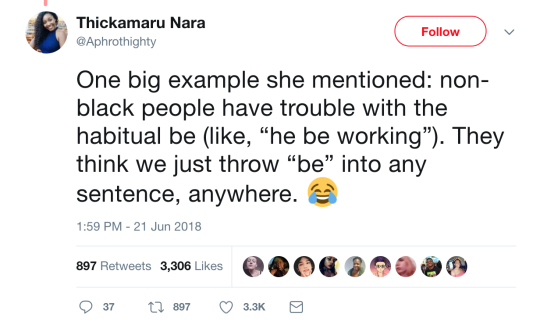
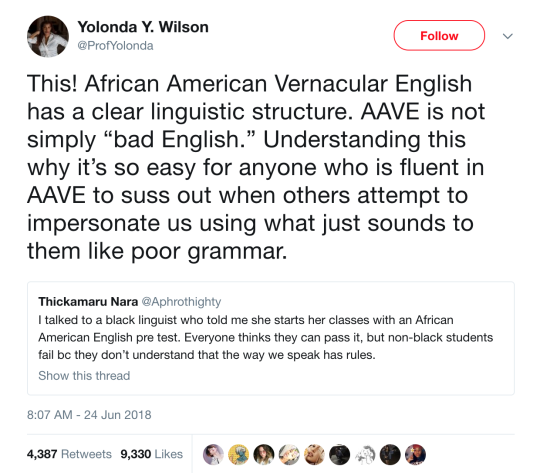
people understand that Spanish speakers speak different dialects of the Spanish language but don’t understand that black people speak a dialect of the English language
saw a variation of this conversation on twitter earlier
I just want to state for the record that this is completely uncontroversial among linguists. It’s the first day of sociolinguistics class.
“I’ve NEVER. Eaten a DONUT. In my ENTIRE LIFE. And I’mNOT. About to start NOW.”
-Crazy customer I had today, upon being offered a complimentary donut
Why is this a real thing that happened in the real world what’s the meaning of this
I’m just gonna copy paste the story here from discord because honestly the whole story is worth hearing
so lady comes through drive thru. “Hi what can I get for you?” “A sesame bagel with extra cream cheese.” “A sesame bagel with extra cream cheese, sure no problem, can I get you anything else today?” “No” “Alright, you can pull up” and I just hear this quiet disgrunted “ ‘Please’ ?”
I’m like uhhhhh, was that even directed at me, I don’t know, I don’t know how to respond to that so I just ignore it like I didn’t hear it. I go up to the window and see this woman, which she honestly looked like a tomato with messy gray hair. Before I have the window halfway open I see her roll her eyes at me so I’m like oh boy here we go, time to put on the stupid sweet customer voice
“Hi how are you today?”
She hands me the money for her bagel and goes “Just a tip. It’s ‘Please pull up to the window.’ not ‘pull up.’ I found that incredibly rude.”
I go “I’m sorry about that, I didn’t intend for that to be rude, I just meant that it was okay to pull up to the window now.” “I know what you meant. But it was rude.” “Well, I apologize. Here’s your bagel, have a great day.” She goes “I’m a MYSTERY SHOPPER.” (If you don’t have Mystery shoppers where you are, it’s kind of like undercover boss where the store owner hires someone through the Mystery shopper program and they place a regular order just to make sure people are following policy) I’m like “… ok”
So I’m about to tell my boss and coworker what just happened when she comes in. And I jump to the front counter because no way I’m letting her talk to my boss before I do.
“Hi, can I help you?” “Yes. This bagel was supposed to be NOT toasted. You toasted it.” “Ohh, I’m so sorry about that! I didn’t hear that. I’ll make you a new one right now.” Coworker beats me to the bagel and I say “A little extra cream cheese on that.” She looks at my boss “She just said a LITTLE cream cheese. I wanted EXTRA cream cheese.” Boss goes “Oh, she said a little extra cream cheese.” “Oh”
Boss goes into kiss ass mode as well and says, “I’m sorry about the mistake, would you like a donut?” Lady goes “I’ve never. Eaten a donut. In my ENTIRE LIFE. and I’m NOT. About to start NOW.” Boss is like “… ok” and we’re all internally going sdhakgsdgkja?
So we get the bagel out and she says to my boss “And I have one more thing to say.” She leans in with a sneer. “Mystery shopper.” boss goes “We don’t do that here.” “yea you do.” “No we don’t.” “yea you do.” “Have a good day.”
Basically we’re pretty sure the lady was crazy and she was absolutely lying because Mystery shoppers are not allowed to tell you that they’re mystery shoppers, and they aren’t allowed to coach you. And even if she was, “please” is not one of the things they look for. They look for a Greeting, whether or not you repeated the order and the price back, and whether or not you upsold. We haven’t participated in the program in over 7 years.












 Ignisfilimundi