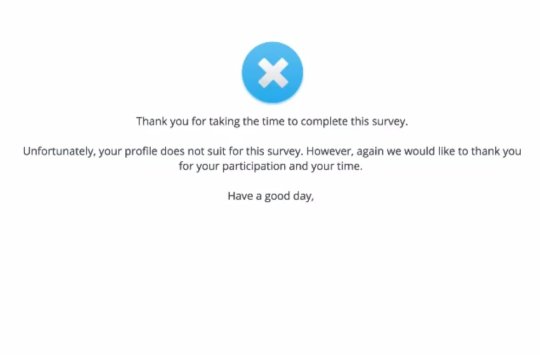
The first question in this Ubisoft customer survey is “What is your gender” with “Male” and “Female” as permitted responses; if you choose “Female,” you’re dumped into a screen that informs you that “your profile doesn’t suit the survey.”
Games companies have got a lot of stick over the years for their failure to understand, cater to, and appreciate their masses of female customers, but it’s a rare thing for a company’s commercial blind-spots to be so vividly illustrated in two screens.
lmao sure they didn’t think of testing the first fucking question
classic ubisoft
Honestly, this being Ubi I’m willing to believe insanely cartoonish supidity over malice.
“lmao sure they didn’t think of testing the first fucking question”
The hell are you talking about? this is Ubisoft, of course they never tested the first question
this is literally the same company who released AssCreed Unity in the state that it was in, and the same ones who used a crack just to remove their own broken DRM (No, really)
Didn’t the first AC also have DRM so bloated and hard on the system resources that people saw MASSIVE performance increases after cracking it out?
Hanlon’s Razor is very much in effect here.
“Ubisoft: TESTINHG!! we knew we forgot something!”
i keep seeing posts out there saying that you need to read the textbook to succeed in class. NO. you do not need to read the textbook. at least not for many, if not most, of your classes. first of all, it’s impractical. profs can assign up to 2-3 a week, and if you’re taking around 4-5 classes, that’s a WHOLE LOT of reading. if you have time to do so, go ahead, but a lot of students don’t have that much time on their hands. so i’m suggesting that you DON’T need to read every single chapter your prof assigns. what you DO need to do is to get smarter at selecting what and when to read, as well as scanning the text effectively.
when TO read the textbook
when your profs tell you that they will not be teaching from the textbook but that the exams will cover material and/or questions from the textbook
when the material is difficult, tricky, or lengthy and you need clarification, further explanation, or examples
when you miss a class
when you HAVE TIME to prepare for lectures in advance
when you feel that you actually learn and retain information better by reading the textbook
when NOT to read the textbook
when your profs teach from the textbook pretty much line by line
when your profs tell you that they will not be assessing you based on information from the text, but from their lectures
a strong implication of this is if your profs require lecture attendance
when you feel that reading the textbook does not help you learn or retain information
when you are constantly confused by the textbook (esp when it comes to calculation-based stem classes like math or cs)
when you have absolutely no time whatsoever to read pages after pages of bad academic puns
what you can do INSTEAD of reading the textbook
look at the course syllabus/schedule to see what you will learn in lecture. have an idea of what material you’ll be covering, then do the following steps.
check the course website/resources and ask yourself: what do you have to work with? are there lecture slides? lecture notes from previous semesters? online links or readings?
if one of the above exists, read the lecture slides/notes. they are usually much less text-intensive and get straight to the point. you can zip through them pretty quickly. you will at least have a basic understanding of the material that will be introduced in class.
google terms and concepts that you don’t understand from just reading the lecture slides. again, the idea is to get you to have a basic understanding of the material and not become an expert. this will help you avoid getting lost during the lecture.
if you’re still a little confused, read selected sections from the textbook that deal with the topic you need more help with. please don’t read the entire thing.
if there are no lecture slides or external resources to help you out, scan the textbook effectively.
how to SCAN textbooks effectively
read the chapter title and section headings
read the highlighted, bolded, or italicized terms and concepts, as well as their respective definitions in the content itself, the margins, and/or the index at the back
google the terms and concepts if you’re still confused
examine any charts, graphs, or flowcharts
examples and example questions can be helpful, so pay attention to those
at the end of each chapter there should be a brief summary or main idea section. read those and do the practical problems if possible.
THIS IS SO USEFUL!!!!! Highly recommend reading this and learning to identify when to use a textbook and not




 Ignisfilimundi